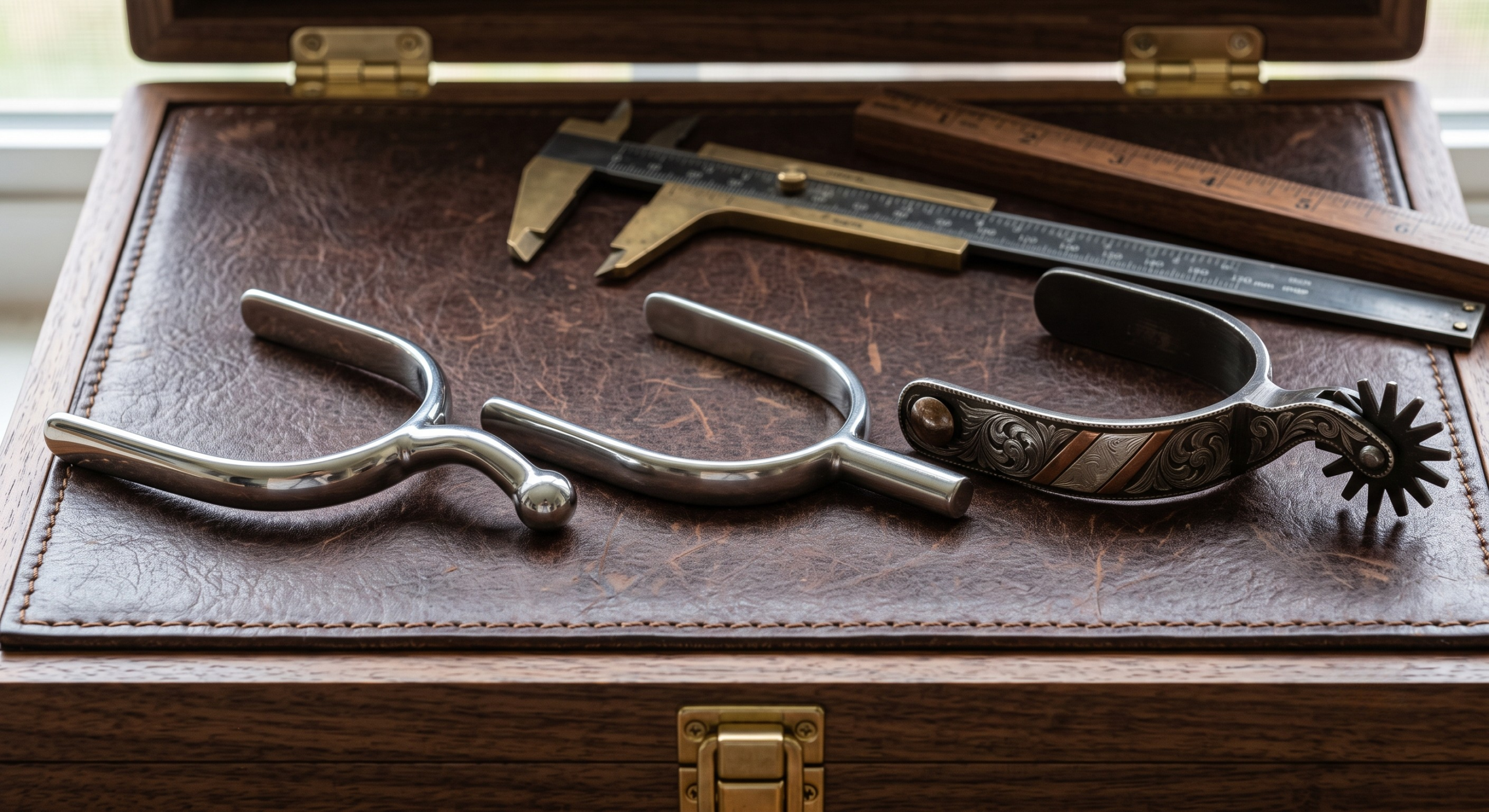
In equestrian sports, spurs are often misunderstood. To the untrained eye, they might look like instruments of force, but to educated equestrians and professional trainers, a spur is a tool for highly refined, nuanced communication. When the rider’s leg aids need to be whispered rather than shouted, the right spur delivers a precise cue that a bulky riding boot simply cannot.
However, selecting the correct spur is an exact science. The combination of neck length, rowel type, and the rider’s physical anatomy must all align with the specific rules of their chosen discipline.
Whether you are a rider looking to refine your leg aids, or a tack retailer ensuring your inventory meets the demands of competitive equestrians, this definitive guide breaks down everything you need to know about the science of spurs.
What is the Anatomy of a Horse Spur?
Before diving into styles and regulations, it is important to understand the basic terminology used by manufacturers and rulebooks alike. A spur consists of three main components:
-
The Band (or Yoke): The U-shaped piece of metal that wraps around the heel of the rider’s boot.
-
The Neck (or Shank): The piece that protrudes from the back of the band. This is the part that makes contact with the horse.
-
The End (or Rowel): The very tip of the neck. It can be a fixed, solid shape or a rotating wheel (a rowel).
How Do Spur Neck Lengths Affect Communication?
The length of the spur’s neck is not just a stylistic choice; it is a functional requirement based entirely on the geometry between the rider’s leg and the horse’s barrel.
When to Use a Short Neck Spur
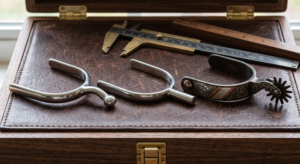
Short neck spurs (typically 15mm to 20mm) are ideal for riders with shorter legs riding horses with average to narrow barrels. In this scenario, the rider’s heel naturally rests very close to the horse’s side. A short neck allows the rider to make contact with a subtle turn of the heel, without accidentally poking the horse during standard movement.
When to Use a Long Neck Spur
Long neck spurs (typically 30mm and above) are necessary for tall riders on horses with average to narrow barrels. If a tall rider’s foot hangs significantly below the horse’s belly, they would have to draw their heel up drastically to make contact with a short spur, destabilizing their seat. A long neck allows the tall rider to apply a cue simply by turning the toe outward, maintaining a quiet and secure leg position.
What Are the Different Types of Spur Ends and Rowels?
The shape of the metal that touches the horse determines the sharpness of the cue. Contrary to popular belief, a moving part is often gentler than a fixed one.
Fixed End Spurs
-
Round End (Ball): A smooth, spherical tip. This is the mildest spur available, offering a dull, gentle pressure ideal for sensitive horses or riders learning to use spurs.
-
Prince of Wales: Characterized by a flat, slightly angled tip. It is sharper than a round ball and provides a very direct, crisp cue. This is one of the most popular everyday riding spurs.
-
Hammerhead: The neck ends in a widened, flat, horizontal piece of metal (resembling a hammer). It disperses pressure over a wider area of the horse’s side, making it milder than a Prince of Wales but firmer than a round ball.
Rowelled Spurs
-
Smooth Rowel (Coin): A solid, smooth wheel that rotates. Because it rolls along the horse’s side rather than dragging against the skin, it is incredibly gentle and excellent for sensitive-skinned horses.
-
Toothed/Sunburst Rowel: Features a wheel with blunt teeth or points. While they look intimidating, the rolling action prevents them from grabbing the skin. The teeth provide a highly localized “tickle” or precise cue, favored in upper-level dressage and western riding.
What Are the Spur Regulations by Equestrian Discipline?
If you are competing, your equipment must comply with the governing body of your sport (such as the FEI or USEF). Always check the most current rulebook, but here are the general standards across major disciplines.
Dressage Spur Rules
Dressage requires absolute precision, and the rules regarding spurs are strict to protect the horse.
-
Spurs must be made of metal (though hard plastic is sometimes permitted in lower national levels).
-
The neck must point directly back from the center of the heel.
-
If rowels are used, they must be blunt, smooth, and free to rotate. Any rowel that is seized or has sharp points will result in immediate elimination.
-
“Swan neck” spurs (where the neck curves upward before pointing straight back) are highly popular to accommodate the long leg position of the dressage seat.
Show Jumping and Eventing Spur Rules
Because jumping requires a shorter stirrup and a more dynamic leg position, the rules accommodate different physical dynamics.
-
Spurs must be blunt and point downwards or straight back.
-
Rowelled spurs are permitted, but the rowel must be blunt and freely rotating.
-
Spurs with necks pointing upwards are strictly forbidden due to the risk of gouging the horse over a fence.
-
Offset spurs (where the neck sits on the inside of the heel band rather than the center) are often allowed to help riders who naturally turn their toes outward.
Western Riding Spur Styles
Western spurs are culturally and functionally distinct, built for the loose-draped leg of the western seat.
-
Bands are traditionally much wider and heavier, often featuring ornate silver engravings or copper inlays.
-
Necks (shanks) feature a dramatic downward curve (a “gal leg” or “gooseneck”) because the western rider’s leg hangs further away from the horse’s side.
-
Large, multi-pointed rowels are standard. Because the western horse is trained to move away from light pressure, the rowel is designed to roll gently along the hair coat to cue lateral movements or spins.
How Should Spurs Fit on Riding Boots?
A poorly fitted spur will slide around, rendering cues inaccurate and potentially damaging expensive leather boots.
-
The band should rest horizontally on the spur rest of the boot (the small ridge on the heel of most field and dressage boots).
-
The metal branches of the yoke should hug the heel snugly but not pinch the foot.
-
Spurs should always be secured with a high-quality leather or synthetic spur strap, threaded so the buckle sits on the outside of the foot to prevent catching on the saddle pad or the horse.
Source Precision Equestrian Equipment
Communication between horse and rider is only as good as the tools utilized. At Legacy Equine Industry, we engineer premium equestrian spurs designed for precise weight, impeccable balance, and discipline-specific compliance. From smooth dressage swan necks to classic Prince of Wales jumpers, our hardware is forged from high-grade stainless steel to ensure a lifetime of rust-free reliability.