As a tack retailer or equine professional, the equipment you stock directly impacts your clients’ success in the saddle. When riders come to you looking to improve their horse’s bit acceptance and responsiveness, one of the most important factors to discuss is material.
The debate between stainless steel and sweet iron horse bits is one of the most common in the equestrian world. Understanding the metallurgical differences, how each affects salivation, and their respective lifespans will help you guide your customers to the right choice—and ensure your inventory meets market demand.
The Metallurgy: Understanding the Core Differences
To recommend the right bit, you first need to understand what they are made of.
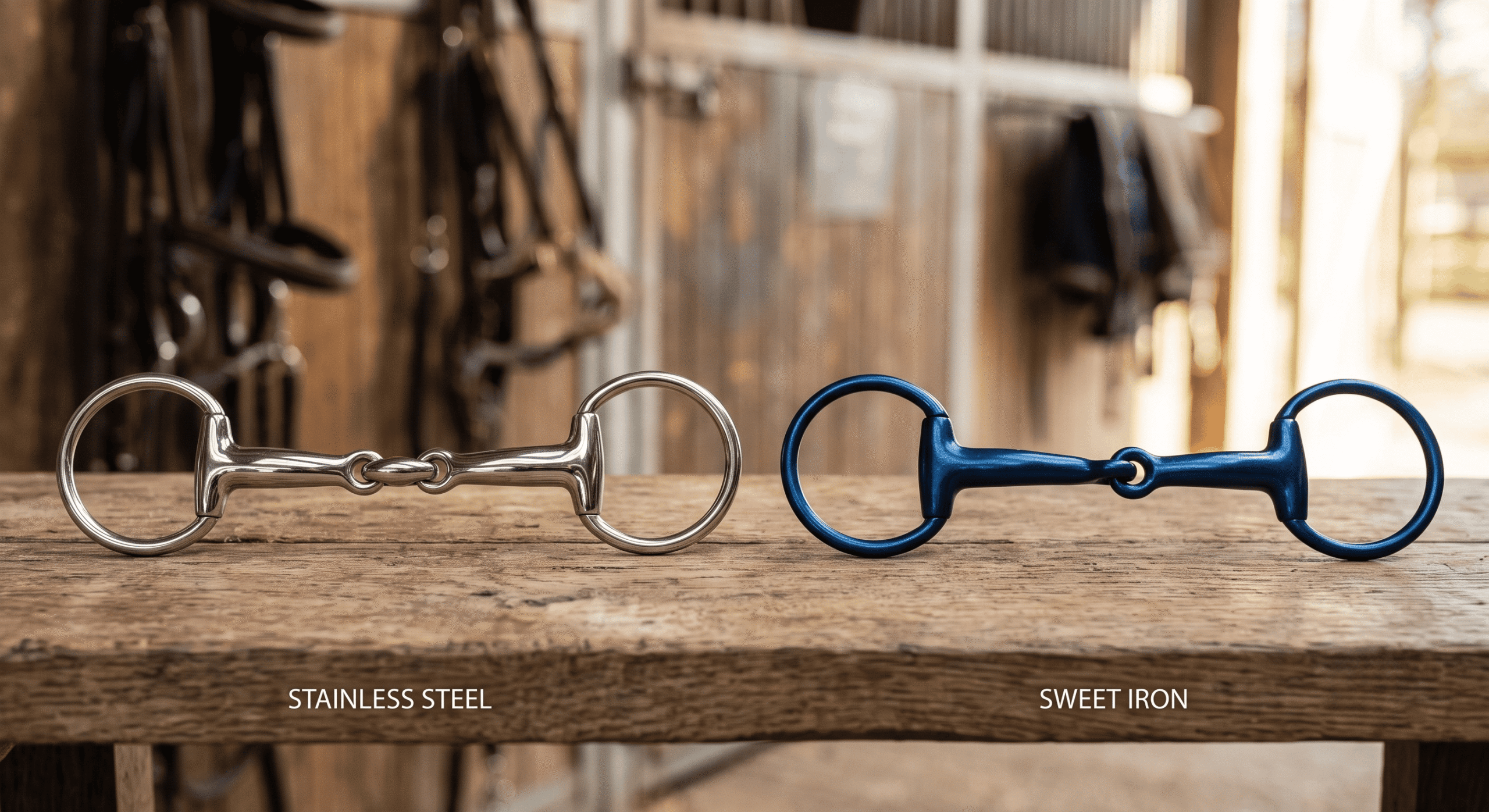
What is a Stainless Steel Bit?
Stainless steel is an alloy composed of iron, carbon, and at least 10.5% chromium. The chromium creates an invis
ible, self-healing oxide layer that prevents the iron from rusting. It is the industry standard for equestrian hardware because it is strong, visually polished, and completely neutral in taste.
What is a Sweet Iron Bit?
Sweet iron, often recognizable by its striking blue color when brand new, is a mild steel specifically designed to oxidize (rust) when exposed to moisture and air. Unlike stainless steel, it lacks the chromium barrier. This intentional oxidation process is the defining characteristic of the material and serves a specific physiological purpose for the horse.
How Material Affects Salivation and Bit Acceptance
The primary reason riders choose one material over the other comes down to how the horse feels and reacts to the mouthpiece.
Why Sweet Iron Creates the “Lipstick” Effect
When sweet iron comes into contact with a horse’s saliva, it begins to oxidize. This rust creates a mild, sweet taste that horses naturally find appealing.
This pleasant taste actively encourages the horse to mouth the bit and increases salivation.
A moist mouth acts as a lubricant, preventing friction and allowing the bit to glide smoothly across the tongue and bars. This increased salivation often results in a soft, white foam around the horse’s lips (affectionately known as “lipstick”). For horses that are tense, dry-mouthed, or resistant to the hand, a sweet iron bit can significantly improve acceptance and relaxation. Additionally, sweet iron warms up faster to the horse’s body temperature, making it more comfortable during cold weather rides.
When Stainless Steel is the Better Choice
Because stainless steel is flavor-neutral, it does not actively stimulate salivation. However, this neutrality is exactly what some horses need. Horses that already have highly active, “busy” mouths or those that excessively chew the bit may become overstimulated by sweet iron. For these horses, the cool, smooth, and tasteless nature of a high-quality stainless steel mouthpiece promotes a quieter, steadier head carriage.
Longevity and Maintenance: What Retailers Need to Know
Your customers will want to know how long their investment will last. Setting the right expectations regarding maintenance will prevent returns and build trust.
The Unmatched Durability of Stainless Steel
When it comes to longevity, stainless steel is the undisputed champion. It has a high breaking strength, will not flake, and requires virtually no maintenance beyond a simple rinse after riding. A premium stainless steel bit can easily last a lifetime, making it an excellent high-value staple for your store shelves.
Managing Oxidation in Sweet Iron
Retailers must educate buyers that the beautiful blue color of a new sweet iron bit is temporary. As it oxidizes, the blue fades into a brownish-gray patina. This rust is not a defect; it is proof the bit is working.
However, sweet iron requires more care. It must be wiped dry after every use and stored in a dry environment. If left damp, excessive rust can build up in the hinges, potentially causing the joints to stick or develop rough patches. If a customer complains of sharp edges, the bit can usually be smoothed with fine wet/dry sandpaper, but severe pitting means it is time for a replacement.
Frequently Asked Questions (FAQ)
Use this section to directly answer the exact queries your customers are typing into search engines.
Why is my sweet iron bit rusting?
Your sweet iron bit is rusting because it is designed to do so. The material oxidizes when exposed to moisture (saliva) and air. This rust layer creates a sweet taste that encourages your horse to salivate and accept the bit more readily.
Are sweet iron bits safe for horses?
Yes, sweet iron bits are completely safe. The natural oxidation process is harmless and beneficial for bit acceptance. However, riders must inspect the bit regularly to ensure excessive rust has not compromised the joints or created sharp edges.
How do you clean a sweet iron horse bit?
After every ride, wipe the sweet iron bit completely dry with a clean cloth. If the bit was heavily soaked or washed, dry it immediately and apply a very thin layer of food-safe oil (like canola or flax oil) to protect the metal, paying special attention to the hinges. Never leave a sweet iron bit to air dry.
Stock Your Tack Room with Legacy Equine Industry
Whether your clients need the lifetime reliability of stainless steel or the mouth-softening benefits of sweet iron, providing high-quality options is essential for your business.
At Legacy Equine Industry, we manufacture premium equestrian hardware designed for durability, safety, and precise communication. Explore our full catalog of beautifully crafted bits, halters, and tack hardware to supply your customers with the very best.